
Last updated August 25, 2026
Free on-site gate assessment - hinges, posts, and your LiftMaster or Nice gate operator checked before anything is quoted
The assessment is free and the quote is the invoice.

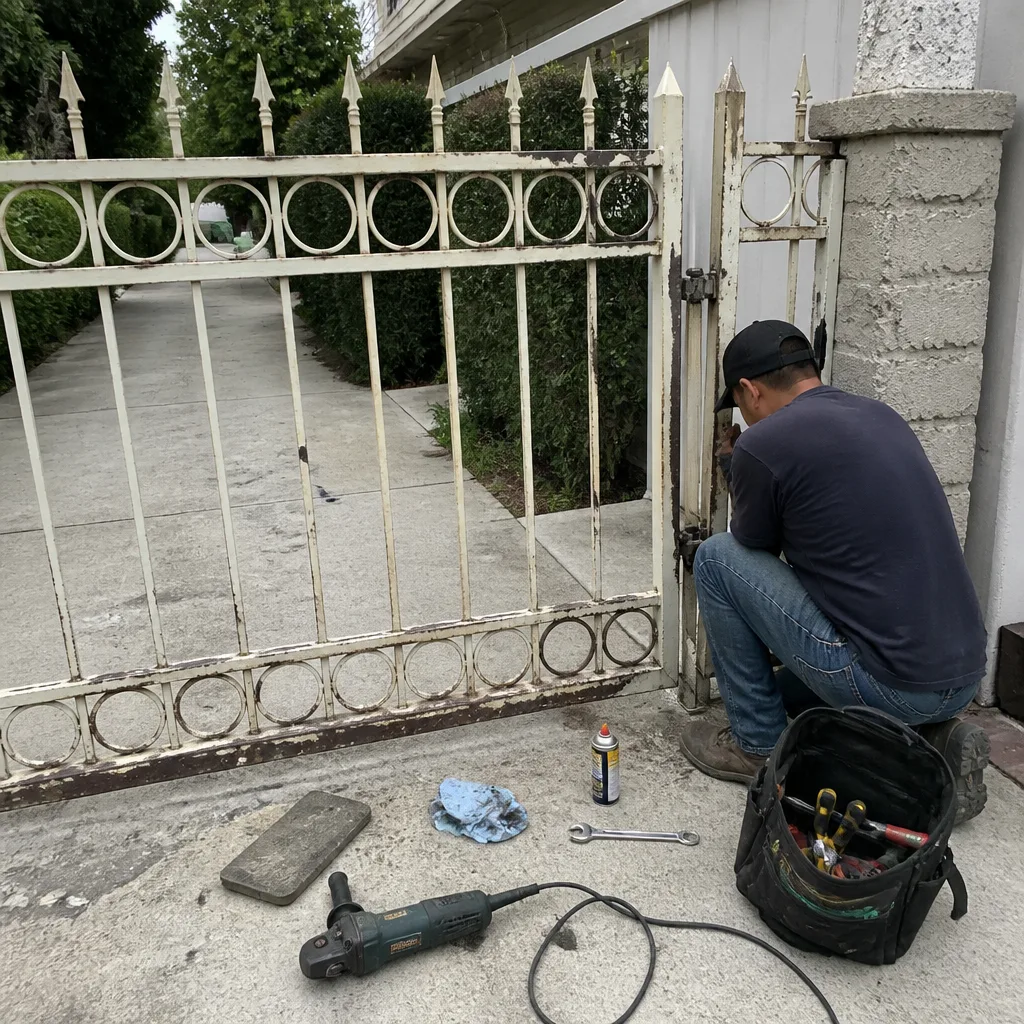 Before
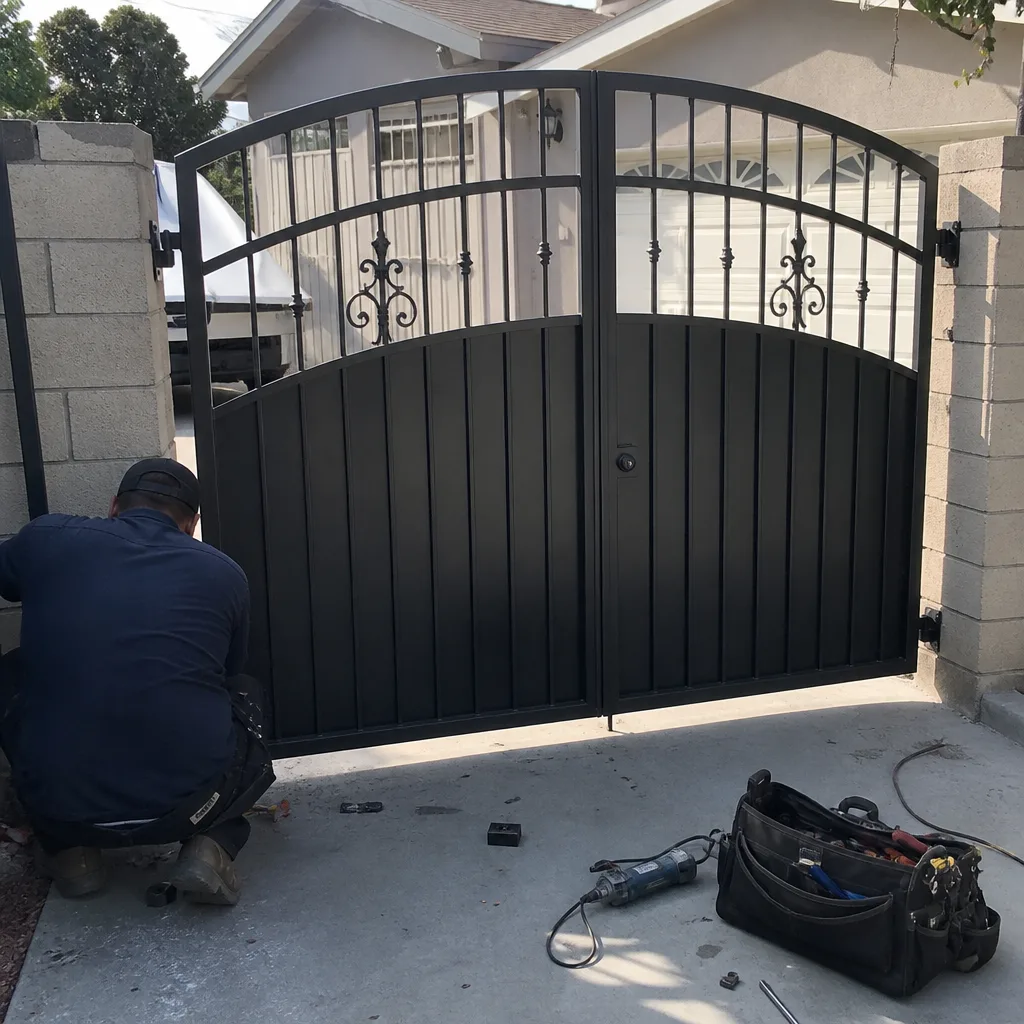 After
After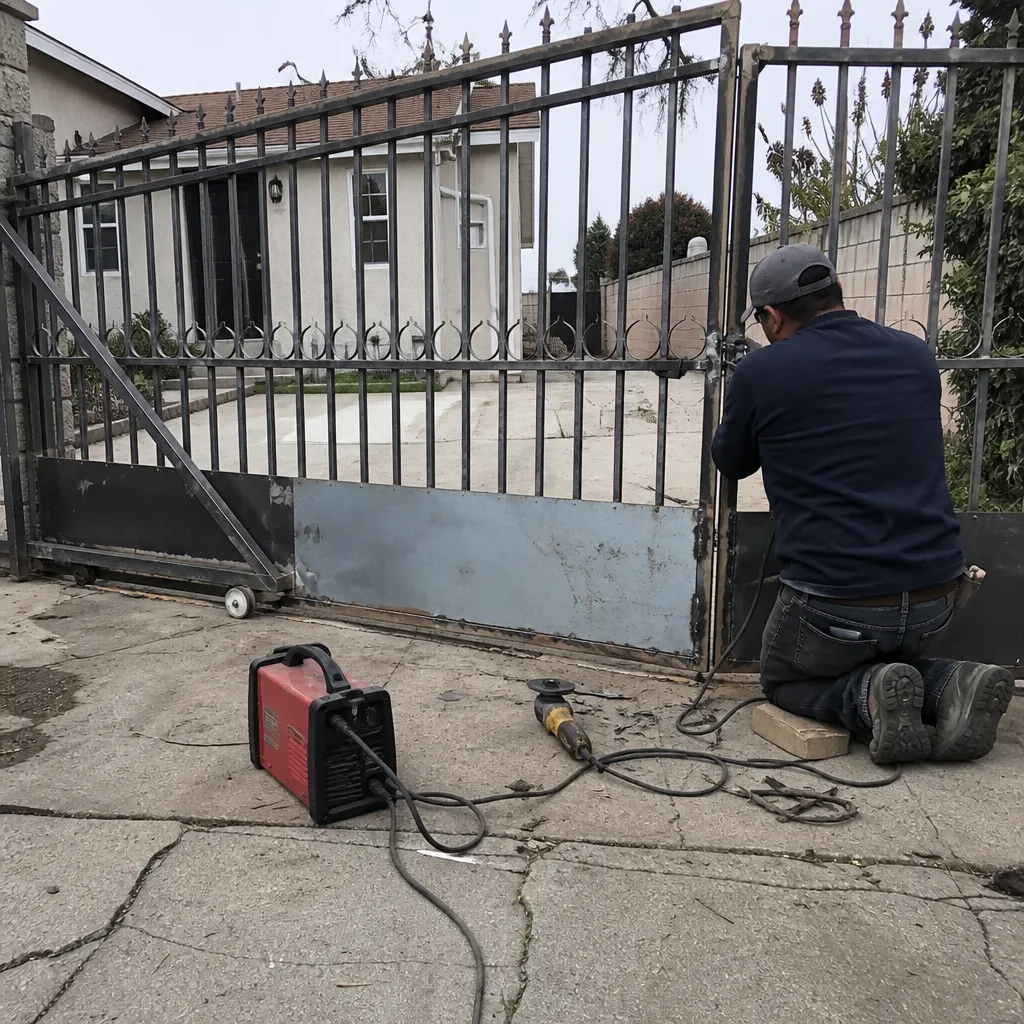 Before
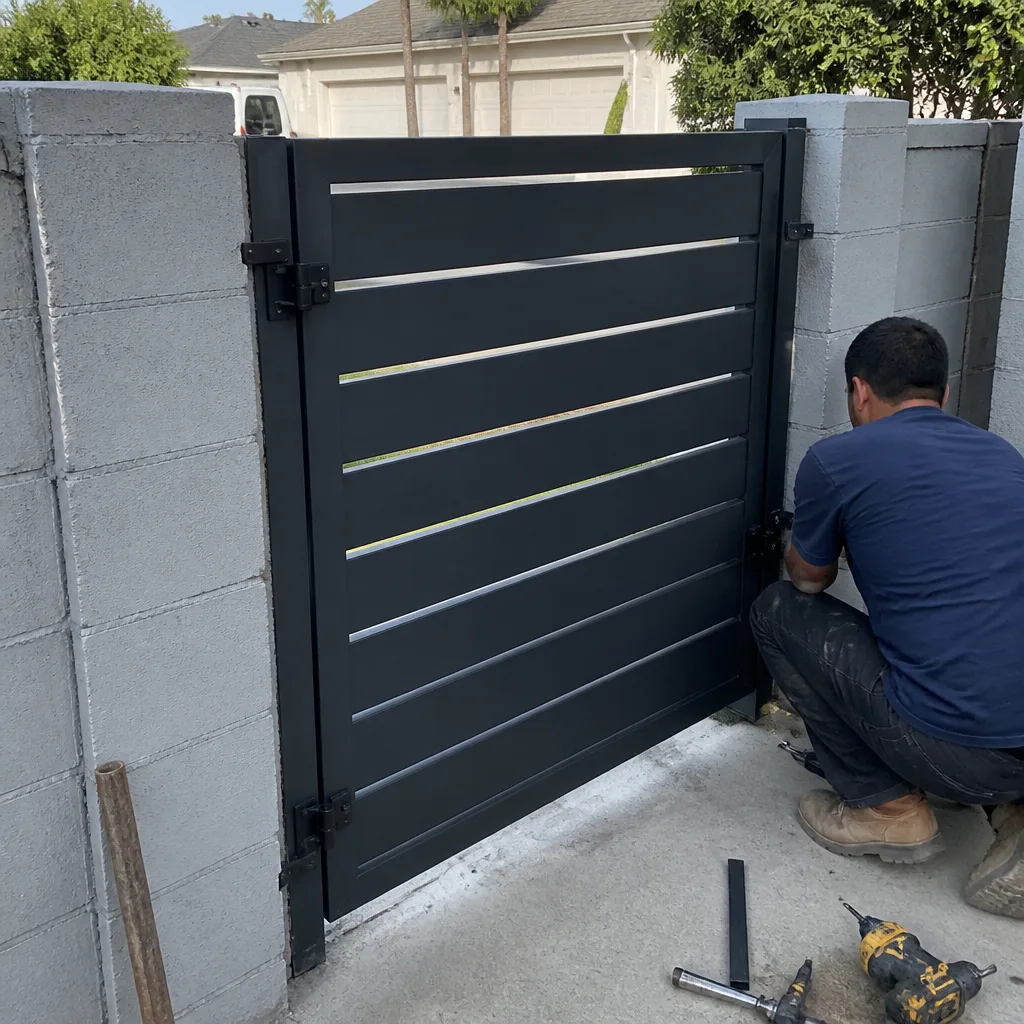 After
After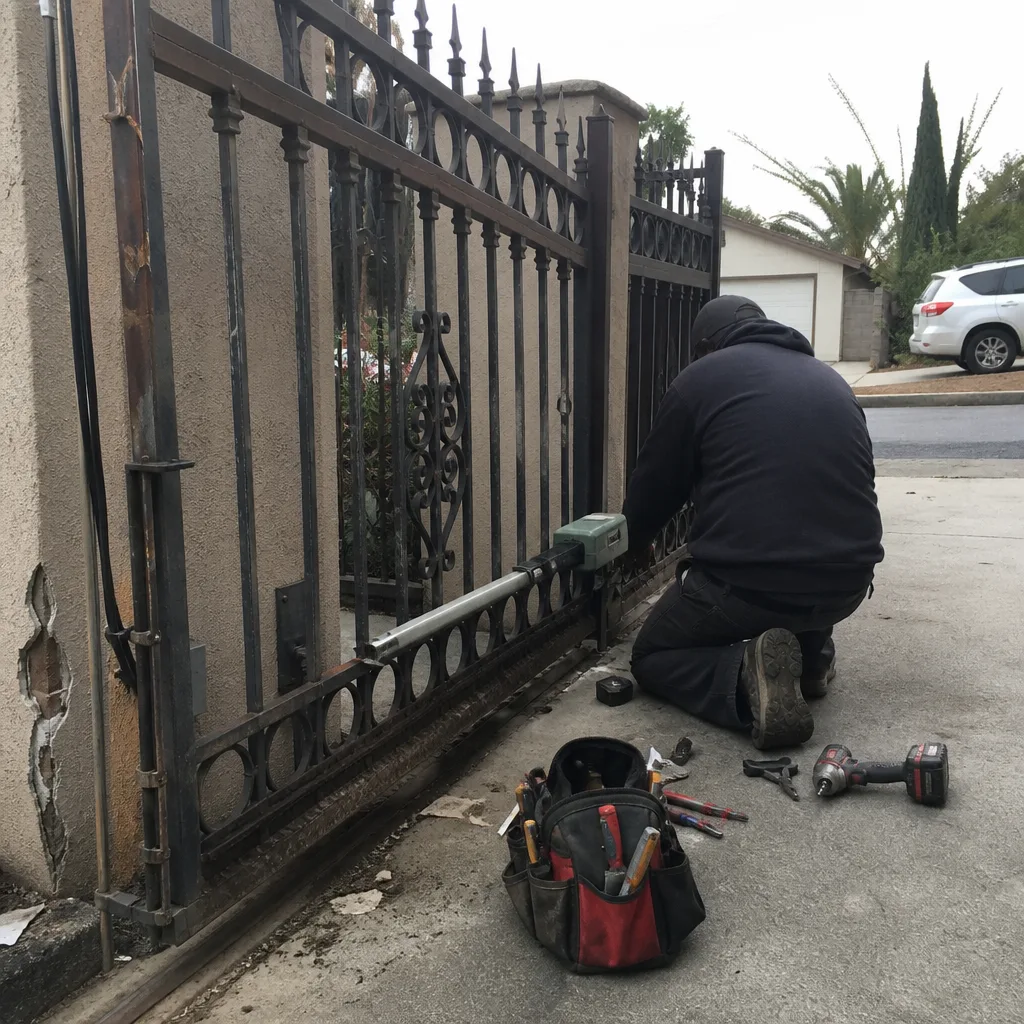 Before
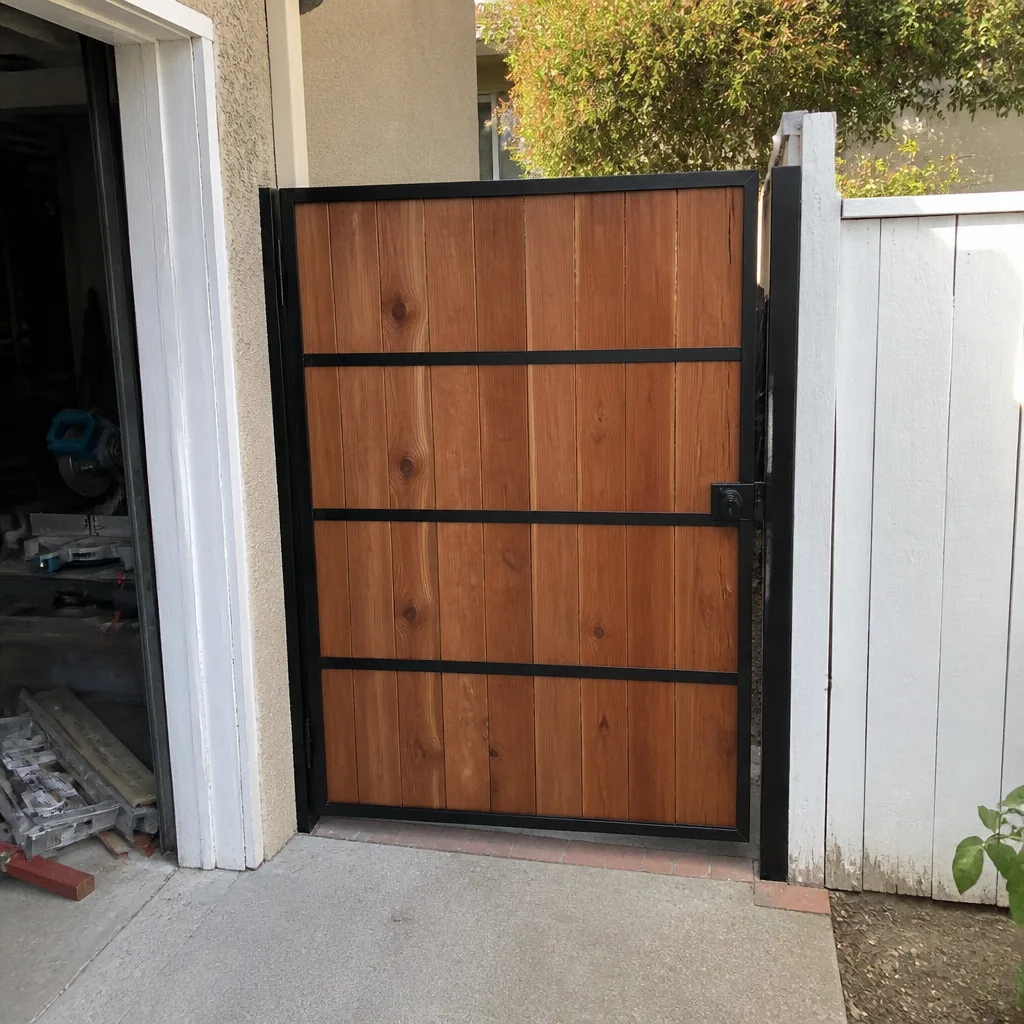 After
AfterDIY vs Professional Gate Repair: The Alhambra Homeowner’s Decision Guide
Most gate failures in Alhambra are not caused by what homeowners think. It is rarely the motor that quits first. It is the hinge. The wheel. The photo eye that got nudged when the gardener’s truck backed too close. The problem is that by the time a gate stops moving, something small has usually become something expensive, because force kept being applied to a mechanism that was quietly failing. This guide will walk you through what is safe to touch yourself, what is not, what things actually cost in Alhambra, and how to make the decision that does not end with a bigger bill in three months.
Quick Answer
For most Alhambra homeowners, light cleaning, lubrication, obstruction checks, and keypad battery changes are reasonable DIY tasks. Any work involving gate springs, hinges under load, welded components, or the automation system itself should go to a professional. The risk is not just the repair failing. It is a 400-pound gate coming off its track. That changes a $250 service call into a $4,000 replacement.
Table of Contents
- What You Can Safely Fix Yourself
- What You Should Never Touch
- The Real Costs of DIY Gate Repair
- How the Alhambra Climate Affects Gate Wear
- Gate Automation Basics: What the Technician Needs to Know
- The Most Common DIY Repair Attempts We See in Alhambra
- Common Mistakes to Avoid
- When to Call a Professional
- Frequently Asked Questions
What You Can Safely Fix Yourself
There is a real and legitimate list of gate maintenance tasks a homeowner can handle without risking life, limb, or the gate itself. These are the jobs we tell our own customers to do between service visits. They take ten minutes, they cost almost nothing, and they prevent the call that costs $300.
In Alhambra, we deal with a lot of atmospheric grit, dry dust in summer, and occasional heavy rain that washes fine sediment into track channels and hinge pins. That grit is the enemy. It acts like sandpaper on moving parts. A homeowner who spends fifteen minutes twice a year keeping channels clear and pivots lubricated will get years more out of a gate than a neighbor who ignores it.
Safe DIY Tasks
- Clearing the track channel: Remove leaves, pebbles, caked dirt, and anything else that does not belong in the slide path. A stiff brush and a shop vacuum work well.
- Hosing down the gate and posts: Use a garden hose, not a pressure washer. Pressure washers force water into motor housings and bearing seals. Simple water and a soft car-wash brush get the grime off.
- Lubricating hinges and wheels: Use a dry spray lubricant with PTFE, available at any hardware store. Spray the pivot points, not the face of the gate. Wipe away excess. Do this twice a year.
- Checking the photo eyes: These are the small sensor boxes mounted a few inches off the ground on either side of the gate opening. Make sure they point at each other and are not obscured by vines, trash bins, or lawn equipment.
- Replacing keypad batteries: If the keypad is sluggish or unresponsive, open it and replace the battery. This is a three-minute job that does not require touching the gate itself.
- Testing the manual release: Most automated gates have a release handle or key that disconnects the motor so the gate can be pushed manually. Test it once or twice a year so you know it works before an emergency, not during one.
These tasks account for maybe ten percent of what goes wrong with a gate system. The other ninety percent requires tools, training, and a healthy respect for the weight involved.
What You Should Never Touch
Here is the list nobody wants to hear. A sliding gate in an Alhambra driveway can weigh anywhere from 300 to 800 pounds depending on length, height, and material. A swing gate arm has enormous leverage. When a spring lets go or a weld fails, the force is instantaneous and there is no warning. You cannot dodge a gate that is falling on you.
Dangerous Components - Leave These Alone
- Gate springs: Torsion springs on swing gates and extension springs on slide gates are under constant tension. They can and do break suddenly. The energy stored in a gate spring is enough to remove fingers, fracture an arm, or worse. Never adjust, remove, or replace a spring without the right winding bars and experience.
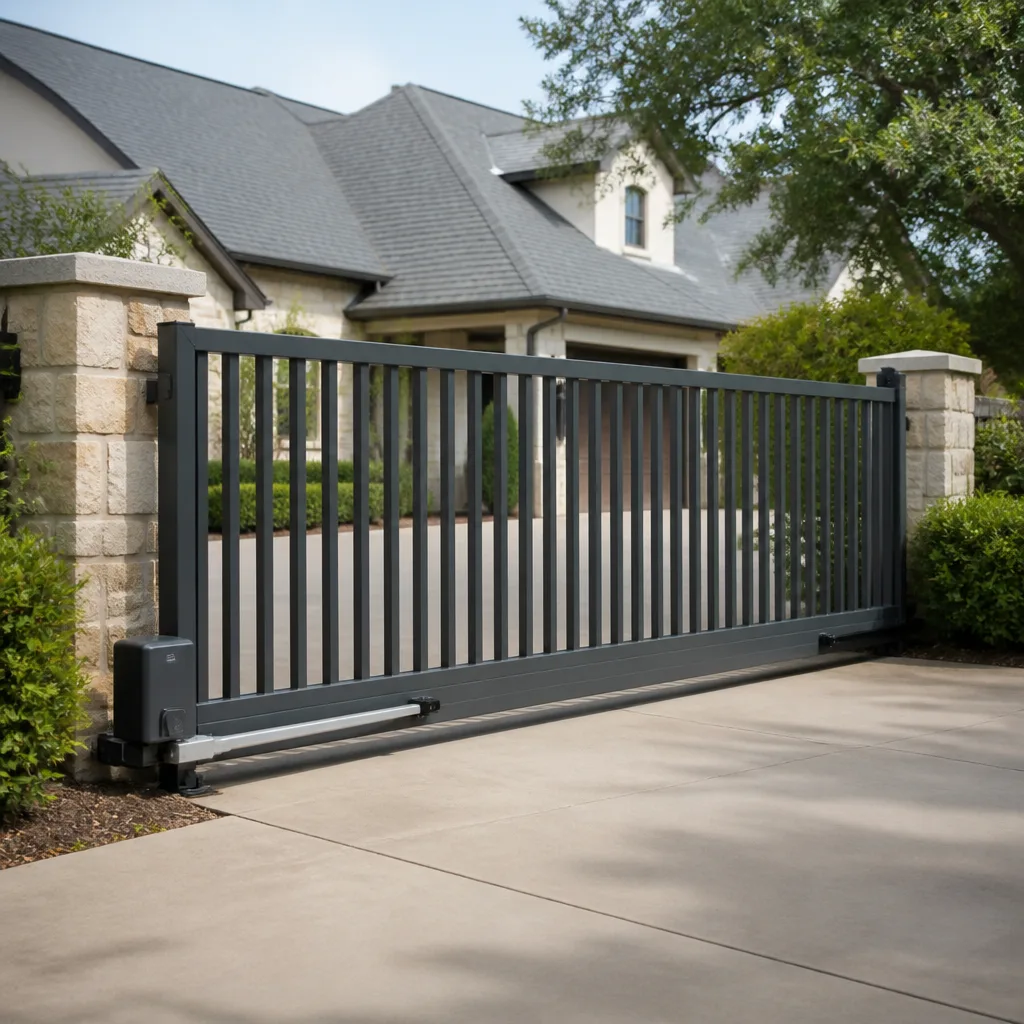
- Cantilever rollers and truck assemblies: On slide gates, the rollers carry the full weight of the gate. Unbolting the wrong bracket while the gate is on it means the gate drops. Even a “small” aluminum gate can pin a person against a post with fatal force.
- Hinges under load: A sagging gate should not be lifted with a jack while you shim or replace hinges. The gate must be properly supported, and the hinge line has to be realigned, not just shimmed. A poorly aligned hinge will bind and tear the next hinge out of the post.
- Welded repairs to stressed joints: A cracked weld on a gate frame is a structural failure. Grinding it and laying a bead over the crack without proper penetration and gusseting will create a stress point that fails again, often worse. This is blacksmith work with an engineer’s eye.
- Any part of the automation system: Gate operator arms, limit switches, circuit boards, capacitor banks, and wiring. These systems carry line voltage. A capacitor holds a lethal charge even after the breaker is off. If the gate shudders, stops halfway, or reverses for no reason, the diagnosis requires a multimeter and training, not guesswork.
We do not say this to scare anyone off from basic maintenance. We say it because we have been called to enough Alhambra properties where a well-meaning neighbor or handyman tried a spring adjustment with a pipe wrench and the result was a bent frame and a visit from us that cost triple what the original fix would have run.
The Real Costs of DIY Gate Repair
When we talk to homeowners about the DIY-versus-professional decision, the conversation usually starts with the price of parts. That is the wrong number. The right number is what the repair actually costs once time, tools, the learning curve, and the do-over are included.
Alhambra-Area Gate Repair Pricing (Typical Ranges)
| Job Description | Typical DIY Cost | Typical Professional Cost |
|---|---|---|
| Keypad battery replacement | $8-$15 | $95-$130 (service call) |
| Photo eye cleaning and realignment | $0-$20 (cleaning supplies) | $120-$180 |
| Hinge lubrication and track clearing | $15-$30 | $110-$160 (often bundled with tune-up) |
| Limit switch replacement | $45-$90 (part, if you can find it) | $220-$310 including part |
| Gate opener control board replacement | $150-$300 (part only, risk of misdiagnosis) | $450-$750 including labor and warranty |
| Slide gate wheel/truck replacement | $80-$160 (parts, plus jack and shoring) | $350-$550 |
| Spring replacement (swing gate) | Not recommended at any price | $230-$380 |
| Full operator replacement | N/A (requires licensing and programming) | $1,400-$2,800 installed |
The pattern is consistent. The professional repair costs more in the moment. The DIY repair costs less only when it works the first time, which it does not always do. Our service vans carry the common parts for nine major gate automation brands: LiftMaster, FAAC, BFT, Linear, Viking, Ghost Controls, DoorKing, Elite, and Mighty Mule. A homeowner without that inventory waits for shipping, reinstalls something that does not fix the problem, and then calls us anyway with a gate stuck half-open and a motor that has been grinding against the stop for four days.
Then there is the cost of the mistake itself. A dropped slide gate that folds a track section. A swing gate that sags into the driveway because the hinge job shifted. A control board that gets fried because the replaced capacitor was wired backward. Those corrections run $600 to $2,000. The original repair would have been two or three hundred.
In our experience serving Alhambra, the honest math works like this: if the job involves a screwdriver, a brush, or a 9-volt battery, do it yourself. If it involves a jack, a welder, a spring, or a voltage reading, call us.
How the Alhambra Climate Affects Gate Wear
Alhambra sits in the western San Gabriel Valley, where the summers are hot, the winters are mild but occasionally wet, and the air carries a distinctive mix of coastal haze and inland dust. We have worked gates in this city long enough to know what the weather does to metal, paint, and electronics, and it is not the same as what happens in Pasadena or Monterey Park two miles away.
The biggest factor is thermal expansion. A 16-foot steel gate can expand by a quarter inch between a cool January morning and a July afternoon at 95 degrees. That expansion is normal, but it means a gate that clears its stop by half an inch in winter may bind in summer. We see this all over Alhambra, from the neighborhoods north of Main Street with their older track-style sliders to the newer estate homes in the hills near Almansor Park.
Dust is the second factor. Alhambra’s long dry season leaves a fine silt on every horizontal surface. That silt works into wheel bearings, hinge pins, and the slide channel. Combined with a little humidity from the occasional marine layer, it becomes a grinding paste. Hence the twice-a-year lubrication routine we recommend above.
Then there is rust. Alhambra does not get enough rain to cause the kind of rot you see at the beach, but the gate posts set in soil with poor drainage will still rust from the inside. We have pulled posts in Alhambra that looked fine above ground and were paper-thin below the soil line. This is why a professional gate inspection checks what is below the surface, not just what is visible.
Finally, the electrical side. The Alhambra grid is stable compared to some neighboring cities, but the heat puts real strain on capacitor banks and control boards in older operators. A control board that sits in a metal housing in 100-degree sun can reach 140 degrees inside. That shortens component life. If your operator is more than 12 years old and lives on a west-facing wall, it has already outlived its design envelope.
Gate Automation Basics: What the Technician Needs to Know
There is a moment in every homeowner’s decision journey when they open the control box, look at the bundle of wires, and close the control box again. That instinct is correct. Gate automation is a discipline, not a skill you pick up from a YouTube video. But you do not need to be an electrician to understand what your technician is doing, and understanding it makes you a better buyer.
A gate automation system has four major components:
- The operator: The motor and gearbox that physically moves the gate. Operators come in slide, swing, and barrier-arm configurations. Each is sized for gate weight, length, and duty cycle.
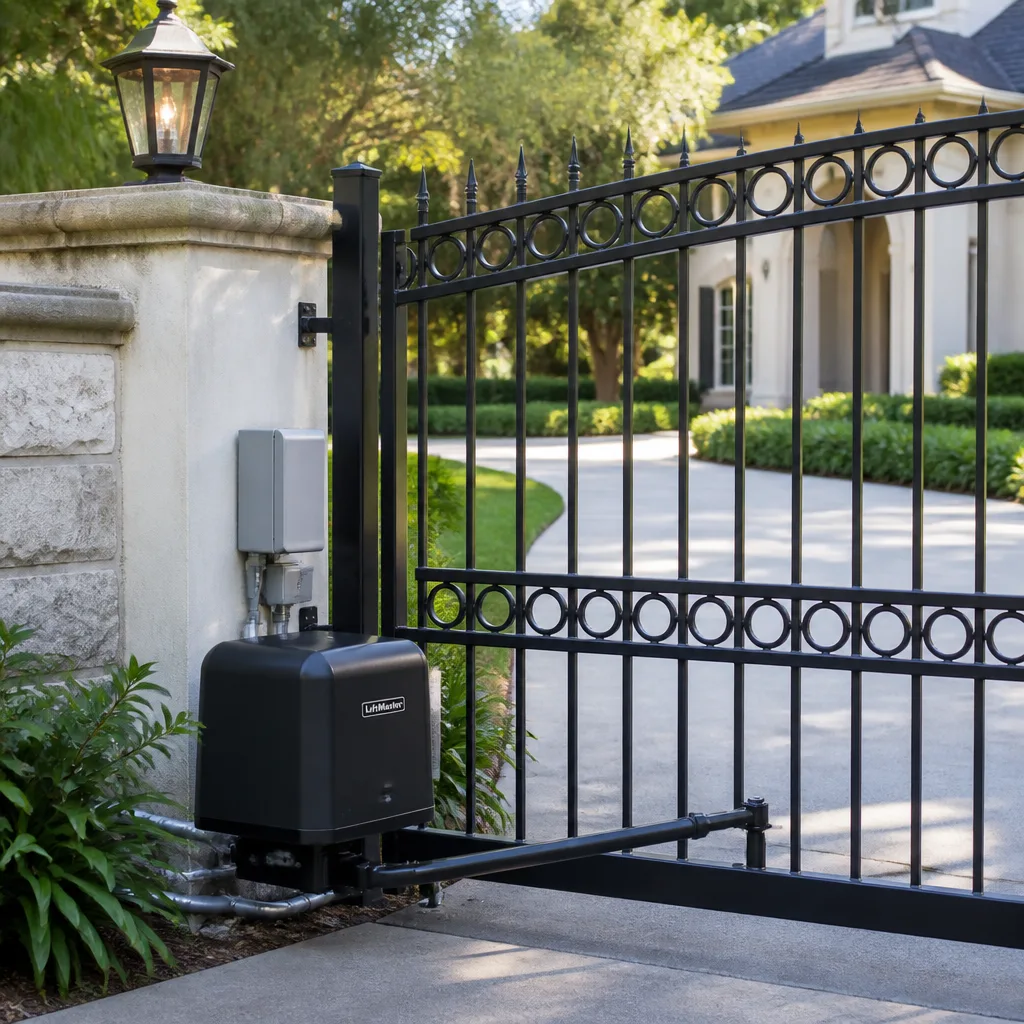
- The control board: The brain. It interprets signals from remotes, keypads, loop detectors, and photo eyes, and it tells the operator what to do. Modern boards have programming menus for force, speed, and auto-close timing.
- The safety devices: Photo eyes, edge sensors, and loop detectors. These are what keep the gate from closing on a car, a child, or a pet. In California, these are not optional. UL 325 compliance requires them on every new install and every significant upgrade.
- The access control: Keypads, remotes, intercoms, phone entry systems, and vehicle detectors. This is what tells the gate to open in the first place.
Most service calls are not motor failures. They are peripheral failures: a photo eye out of alignment, a keypad with dead batteries, a remote that lost its programming, a limit switch that drifted. The technician’s core skill is diagnosis, which requires knowing all nine major brands well enough to isolate the fault without throwing parts at the problem. That is what we train for, and it is why we can usually finish a repair in one visit.
For homeowners trying to self-diagnose, the classic advice applies: if the gate moves but stops in the wrong place, it is likely a limit switch or obstruction sensor. If it hums but does not move, it is likely a capacitor or a seized gearbox. If it does nothing at all, check the breaker first, then the control board fuse. After that, call someone who carries the parts.
The Most Common DIY Repair Attempts We See in Alhambra
We do not have to imagine what goes wrong when a homeowner tries a gate repair. We see the results every month. These are the recurring patterns from our service calls across Alhambra, and they fall into a predictable list.
Pattern 1: The shim job
The gate is sagging, so the homeowner or handyman unbolts the top hinge, slides a stack of washers behind it, and tightens everything back down. The gate looks straighter for a week. Then the hinge bind starts, the operator strains, and the bottom hinge begins to tear out of the post. The real fix was to repair or replace the post and reset the hinge line, not to shim around it.
Pattern 2: The WD-40 bath
WD-40 is a penetrating oil and water displacer. It is not a gate lubricant. Soaking the hinges, wheels, and track with it makes the gate glide for a few days and then makes everything worse, because the oil traps dust and turns into the grinding paste we described earlier. Use a dry PTFE spray instead, and keep the WD-40 for the garage door.
Pattern 3: The brute-force adjustment
The gate closes too hard. The homeowner finds the force-adjustment screw or dial and cranks it down. Now the gate reverses before it closes at all, so they crank it back up, and now the gate crushes a recycle bin. Force settings interact with speed, ramp time, and safety device sensitivity. Changing one without understanding the others is how you end up with a gate that slams or a motor that burns out trying to push through an obstruction it cannot detect.
Pattern 4: The wrong replacement part
A homeowner with a Viking operator buys a generic control board online because it was cheaper. It arrives, the connectors do not match, and now there is a pile of components on the driveway and a gate stuck in the open position. We carry certified parts for the brands we service, including Viking, Ghost Controls, DoorKing, and Linear. The right board costs more than the knockoff, but it costs less than fixing the damage from the knockoff.
Pattern 5: The skipped safety check
This is the one that worries us most. A homeowner adjusts something, gets the gate working, and disables a safety device because it “kept stopping the gate for no reason.” That reason was a child on a bicycle or a car in the path. A gate without functioning photo eyes and edge sensors will injure someone eventually. Do not defeat the safety system. Call someone who can fix what is actually wrong with it.
We have never had a customer call us and say, “I’m sorry I waited too long to fix this properly.” We have had many call us and say, “I wish I had called you before I tried this.” The difference is usually about two hours of labor.
Common Mistakes to Avoid
- Ignoring a noisy gate: A gate that screeches, rattles, or groans is sending a diagnostic message. In Alhambra’s dusty climate, that noise is almost always dry metal on dry metal, which means accelerated wear. Address it within a week, not a season.
- Lubricating the track channel itself: Sliding gates roll on wheels, not on the track. The track needs to be clean and dry. Lubricating it creates a slick paste that the wheels skate on, causing jerky movement and premature wear.
- Using the curb as a gate stop: When a swing gate does not stop where it should, the gate hits the driveway or the curb. Every impact beats the hinge welds and the operator’s internal stop. Fix the stop position instead of letting the concrete take the abuse.
- Disconnecting the manual release and leaving it disconnected: The gate now moves freely, which feels like a solved problem until wind pushes it into a car or a person. A freestanding gate with no motor resistance is an unguided missile.
- Tightening bolts without checking why they loosened: A bolt that loosens repeatedly is showing you a cracked bracket, a misaligned post, or vibration from a bad wheel. Re-tightening it is a temporary patch, not a repair.
- Skipping the regular tune-up: An $89 seasonal tune-up catches small problems before they become service calls. In Alhambra, with our dust and heat cycles, annual tune-ups are the cheapest insurance a gate owner can buy. Ironworks Gate Co. offers this service at that exact price.
- Assuming the warranty covers everything: Operator warranties cover the operator, not the install, not the wiring, and not the damage caused by a bad install. Read the warranty terms, or ask your installer to explain them in plain language. A good contractor will not mind the question.
When to Call a Professional
Call a professional when the gate is heavy, the part is under tension, the problem involves electricity, or the diagnosis is not obvious after twenty minutes of inspection. That is the short answer. The longer answer is that most Alhambra homeowners reach a point where the cost of guessing exceeds the cost of hiring, and that point usually arrives the first time a gate refuses to open at 6:45 a.m. on a workday.
Specific signs to call immediately: the gate moves slowly or stops mid-travel, the operator makes a sharp hammering sound, the gate sags visibly at the latch side, the photo eyes are clean and aligned but the gate still reverses, the circuit breaker trips when the gate operates, and any situation where a spring, cable, or weld looks damaged. These are not diagnostics for a Saturday afternoon with a socket set.
Ironworks Gate Co. offers free estimates in Alhambra. Call (747) 277-8422 and a live person will answer, 24 hours a day, 7 days a week. We quote the price before any work starts, and we put our Ironworks Gate Co. home standard on every job: written 90-Day Done Right Promise, no paperwork, no arguing. If it is not right, we come back and make it right.
Frequently Asked Questions
Most gate repairs in Alhambra run between $180 and $550, depending on the component and the brand. Simple jobs like limit switch replacement or photo eye realignment land on the lower end. Operator replacement, welded frame repairs, and full spring replacements land on the higher end. Every Ironworks Gate Co. estimate is free, and the price is agreed before any work begins. Call (747) 277-8422 for an exact quote.
You can replace keypad and remote batteries yourself, but internal opener repairs involve line voltage, stored capacitor charge, and programming that requires brand-specific training. The risk of electrical shock or component damage is high. The correct move for most homeowners is to call a technician who carries parts for the opener’s brand on the truck.
A gate that stops halfway is usually experiencing an obstruction signal from a photo eye or an edge sensor, or a limit switch that has drifted out of adjustment. In Alhambra’s dusty conditions, dirty photo eyes are also common. Clean them first, then if the problem persists, call for a service visit before the motor overheats from repeated cycling.
Most residential gate operators in Alhambra last 10 to 15 years with proper maintenance, assuming they were sized correctly for the gate at installation. Operators in full sun on west-facing walls tend to fail sooner due to heat buildup. The annual $89 seasonal tune-up from Ironworks Gate Co. is designed to catch the failures that shorten that lifespan.
Photo eye failures and slipping limit switches are the most common service calls we respond to in Alhambra. Both are usually diagnosed and repaired in a single visit. After that come worn slide gate wheels and hinge failures on older swing gates, which take more labor but are still typically same-day repairs whenever parts are in the truck.
Ironworks Gate Co. is trained and equipped on nine major gate-automation brands: LiftMaster, FAAC, BFT, Linear, Viking, Ghost Controls, DoorKing, Elite, and Mighty Mule. Whatever opener is on your driveway, the odds are good we carry the parts and know the programming. Call (747) 277-8422 and tell us what brand is on the gate; we will tell you over the phone whether it is a repair we can start today.
The Bottom Line
Homeowners who take on basic maintenance will get more years from their gates, and homeowners who resist the urge to disassemble a spring or open a control box will keep their families safe and their repair bills manageable. The line between the two is not hard to find: if the task involves cleaning, lubricating, or battery replacement, do it. If it involves weight, tension, voltage, or welding, call Ironworks Gate Co. at (747) 277-8422. We have been serving Alhambra since long enough to know which side of that line each job falls on, and we will tell you straight on the phone, free of charge.
Written by Victor Salinas, Owner at Ironworks Gate Co., serving Alhambra since 2013.