
Quick Summary
When an automated driveway gate stalls, hums, or refuses to close, systematic electric gate motor troubleshooting helps isolate simple mechanical binding and misaligned sensors from internal drive failures. Drawing on over four decades of diagnostic experience, Ironworks Gate Co. explains how to inspect breakers, align safety eyes, and test manual releases, while warning that high-voltage board repairs and capacitor replacements require professional same-day diagnosis. Readers will understand how to evaluate opener symptoms safely and know when to call Ironworks Gate Co. at (747) 277-8422 for a free on-site assessment and same-day gate motor repair.
Electric Gate Motor Troubleshooting: Same-Day Fixes
When an automated driveway gate refuses to open, hums quietly without moving, or reverses halfway across the entrance, the immediate assumption is often that the motor has burned out. A motor that appears to have failed may instead be affected by mechanical resistance, a safety-device fault, a power issue, or a motor problem.
Before buying an expensive replacement motor or tearing apart an operator enclosure, working through a structured troubleshooting process recommended by technicians at Ironworks Gate Co. can pinpoint the actual failure point. Diagnostic safety must always come first. The CPSC estimated nearly 25,000 automatic-gate-related injuries from 1990 through 2000, including approximately 9,000 children younger than 15, and reported 32 deaths from 1985 through October 2001, including 20 children. An independent review of 14 OSHA investigation summaries identified 4 fatal and 10 nonfatal cases; 8 occurred during installation, repair, maintenance, troubleshooting, or clearing a malfunctioning gate. Automatic gates generate substantial torque. Always keep the gate path clear, and disconnect primary power before opening enclosures. Warning: Never bypass entrapment-protection devices. Professional service is recommended for high-voltage testing, capacitor handling, live board work, or repairs involving unsupported gates.[1]
Electric Gate Motor Troubleshooting: Diagnostic Steps & Immediate Checks
Electric Gate Motor Troubleshooting in brief: Verify incoming power at the breaker, inspect lenses, alignment, wiring, and indicator status according to the operator manufacturer’s instructions, and test the gate leaf on manual release. If a motor hums, clicks, or stops mid-travel, potential causes include physical track resistance, hinge binding, an obstruction, wiring faults, safety loops, edge sensors, travel limits, a failed start capacitor, or motor faults.[4]
Modern residential and commercial gate operators monitor electrical current draw. When physical resistance spikes from worn hardware, settling posts, or track obstructions, the control board can cut power to protect the drive system. Determining why the system stopped requires separating electrical faults from mechanical friction.
Immediate Power and Safety Sensor Checklist
Work through these baseline checks before adjusting internal board settings or replacing mechanical parts:
- Verify Power and Breaker Status: Check your main electrical sub-panel for a tripped breaker. High current draw from a binding gate can trip breakers. If the breaker is on, consult the operator manual for the proper power-cycling procedure.
- Inspect Photo-Eye Alignment: Check the safety beams mounted across the driveway entrance. Dust, condensation, cobwebs, or direct sunlight on the receiving lens can prevent operation. Inspect lenses, alignment, wiring, and indicator status according to the operator manufacturer’s instructions.
- Test with the Manual Release: Disengage the operator drive arm or chain using the manufacturer release mechanism. Make sure the gate leaf is supported so it does not roll or swing unexpectedly. Move the gate by hand through its range of motion. It should move smoothly. If the gate binds or catches, the issue is mechanical resistance rather than a motor failure.
The Info-Gain Reality: Mechanical Overload vs. Motor Failure
Structural post movement can cause symptoms that mimic motor failure. Soil settling or environmental wear can cause hinge posts to lean out of plumb.
When a heavy gate sags out of plumb, hinge binding creates extreme friction during its swing arc. The control board interprets this resistance as an obstruction and cuts power to protect the drive gears. According to Ironworks Gate Co., straightening or repairing the hinge post and realigning mounting brackets can restore operation without replacing the motor.
Automatic Gate Repair
When an operator malfunctions, systematic testing prevents wasted time and money. Driveway gate opener troubleshooting starts by identifying whether the symptom happens under load or with the motor disconnected from the gate leaf.
Common Automatic Gate Symptoms
Gates operating in dusty environments or areas with hard water face physical challenges. Debris builds up along tracks, while unlubricated pivot pins generate high resistance. Common operational symptoms include:
- Gate opens halfway and stops: Can be caused by an out-of-plumb hinge post, a warped track section, an obstruction, or an internal force adjustment setting.
- Motor hums but does not turn: Indicates that voltage is reaching the unit, but the motor cannot turn the drive assembly due to mechanical binding, low line voltage, capacitor failure, or motor issues.
- Gate opens automatically but will not close: May indicate a misaligned photo eye, an active safety loop detector, an edge sensor fault, travel limit misadjustment, or control wiring issues.
- Gate motor clicking noise without movement: The control board relay may be energizing while power fails to reach the motor windings, or the mechanical gearbox may be jammed.
Safety Considerations and Professional Service
Because gate operators blend electrical power with high-torque mechanical linkages, improper adjustments can create severe hazards. Safety reversal circuits must never be set to excessive force to overcome mechanical binding. Warning: Never bypass entrapment-protection devices. Professional service is recommended for high-voltage testing, capacitor handling, live board work, or repairs involving unsupported gates.
Gate Opener Repair
Need electric gate motor troubleshooting?
We’re available now - call for a fast, free estimate.
Dedicated gate opener repair focuses on the drive head, internal electrical circuits, and power transmission hardware.
Evaluating Humming, Clicking, and Grinding Sounds
Audible feedback can help guide diagnosis:
- Electric gate motor hums but does not open: If the gate leaf moves freely on manual release, the hum may point to a failing AC start capacitor, low line voltage, or internal motor winding problems.
- Automatic gate opener grinding noise: Grinding sounds point toward internal gear wear, stripped output gears, loose drive chains, or worn bearings.
- Clicking without operation: When you activate the gate and hear a click at the control box, the receiver and logic board are receiving the signal. Potential issues downstream include motor relays, limit switches, wiring faults, or power output leads.
Capacitors, Gearboxes, and Limit Switches
As noted by Ironworks Gate Co., single-phase AC gate motors depend on start capacitors. Inspect the capacitor casing for bulging, oil leaks, or scorch marks. Capacitors must always be handled with appropriate safety precautions. In chain-drive and screw-drive units, verify that physical limit nuts or magnetic limit sensors have not slipped out of position.
Electric Gate Repair
Electrical troubleshooting requires testing low-voltage control inputs, vehicle loop detectors, and main line power.
Control Board and Wiring Diagnosis
Use a multimeter to verify that proper voltage is arriving at the operator primary terminal block. Significant voltage drops under load indicate undersized or damaged power wiring runs. Inspect low-voltage accessory wiring for corrosion, loose terminals, or damaged conduits.
Enclosure Maintenance and Relay Inspection
In outdoor installations, control enclosures can attract insects, pests, and moisture. Intrusion behind printed circuit boards can short out traces and damage relays. Disconnect main power before opening the control box to inspect for debris, damaged traces, blown fuses, or corrosion.
Gate Installation and Safety Standards
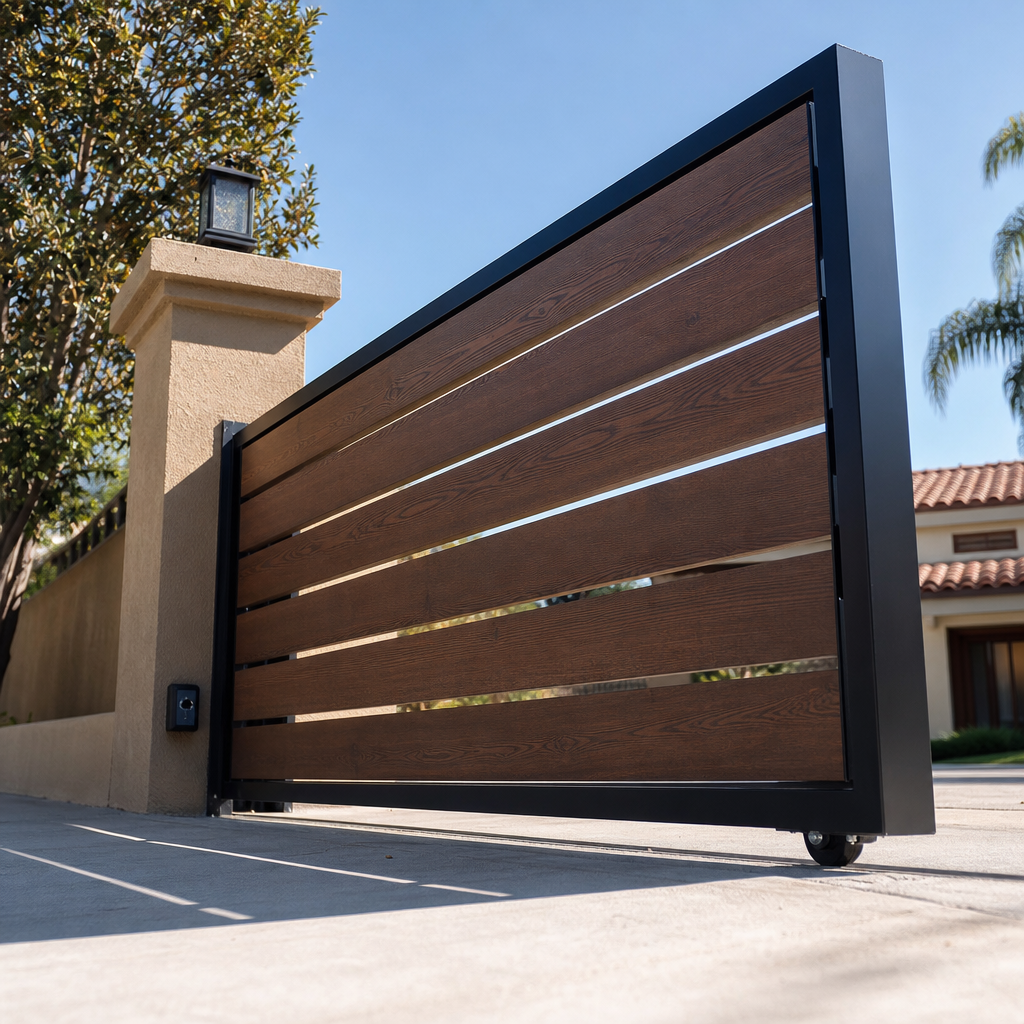
Troubleshooting recurring motor stalls often reveals installation errors rather than broken parts. When the opener is poorly matched to the gate installation, operational problems will repeat continually.[2]
Matching Motor Horsepower to Gate Geometry
Swing gates require precise arm geometry. If pivot brackets are mounted at incorrect dimensions, the actuator arm loses mechanical advantage near the fully open or fully closed positions. This forces the motor to draw higher current, triggering safety shutdowns. Heavy leaves require appropriately rated commercial operators or hydraulic systems capable of handling the load.
Modern Safety Compliance
Automated vehicular gates are associated with ASTM F2200 design and installation guidance, and gate operators are listed under UL 325 safety standards. When troubleshooting, verify that safety devices and entrapment-protection systems are properly connected and functioning in accordance with the operator manufacturer’s instructions before assuming the drive motor has failed.
Driveway Gate Maintenance
Preventative maintenance keeps the physical gate structure moving freely, helping protect the motor from premature failure.
Aligning Driveway Gate Leaves
Regular maintenance should follow a clear schedule:
- Hinges and Pivot Points: Lubricate hinges and pivot points regularly according to manufacturer recommendations to reduce friction and wear.
- Slide Gate Ground Tracks: Keep ground tracks clear of dirt, gravel, and debris. Avoid coatings on ground tracks that can bind track rollers.
- Chain Tension: Check drive chains on sliding gates for proper tension according to manufacturer specifications. Overly tight chains place excess load on motor gearbox bearings.
Gate Types and Diagnostic Considerations
Need electric gate motor troubleshooting?
We’re available now - call for a fast, free estimate.
Iron and Wrought Iron Gates
Specialists at Ironworks Gate Co. emphasize that wrought-iron gates place heavy static and dynamic loads on hinge posts. If the post foundation shifts, the gate latch can misalign and the operator arm can bind against mounting brackets.
Sliding and Rolling Driveway Gates
Sliding gates rely on smooth wheel bearings. If rollers seize, the motor must pull excessive weight across the track. If a sliding gate motor runs but the gate creeps or stalls, check roller bearings and track alignment.
Swing Gates and Articulated Arm Systems
Linear actuators and articulated swing arms rely on internal drive screws or hydraulic systems. Check linear actuators for bent shafts or worn internal nuts. For hydraulic swing arms, check for fluid leaks and inspect fluid levels according to manufacturer instructions.
Wood and Composite Privacy Gates
Wood gates absorb moisture during wet weather, significantly increasing leaf weight. A motor calibrated during dry conditions may stall when the gate absorbs water and exceeds the set force threshold.
Parts and Components Diagnostic Overview
| Component | Primary Failure Symptom | Field Diagnostic Test |
|---|---|---|
| Start Capacitor | Motor hums, will not turn, trips thermal overload. | Inspect for physical damage, leaks, or test per manufacturer instructions. |
| Photo-Eye Sensor | Gate opens normally but refuses to close; clicking board. | Inspect lenses, alignment, wiring, and indicator status according to the operator manufacturer’s instructions. |
| Limit Switch | Gate stops too early, overtravels, or fails to start in one direction. | Inspect switch mechanism, wiring, and sensor alignment per manufacturer manual. |
| Logic Control Board | No response to inputs, erratic cycling, unreadable display indicators. | Verify power input, check fuses, and inspect for damage per manufacturer manual. |
| Hinge / Track Rollers | Motor runs slow, makes grinding sounds, stalls midway. | Disengage manual release and move gate leaf by hand to isolate physical friction. |
Gate Opener Brands and Diagnostic Protocols
LiftMaster Operators
LiftMaster gate operators feature diagnostic LED displays. Refer to the manufacturer documentation and the wiring diagram on the chassis cover to interpret diagnostic flash codes.
DoorKing (DKS) Operators
DoorKing systems rely on status LEDs on the circuit board. Consult the operator manual to verify diagnostic indicator states for safety accessories, reverse loops, and edge sensors.
Viking, Nice Apollo, and BFT Systems
Viking, Nice Apollo, and BFT control units feature diagnostic displays and error logs. Always consult the specific manufacturer technical reference manual before altering electronic force limits or diagnosing error codes.
Frequently Asked Questions About Gate Motor Troubleshooting
Why is my electric gate motor humming but not moving?
A humming gate motor indicates that power is reaching the motor windings, but the shaft cannot rotate. Disconnect the manual release and check if the gate moves freely by hand. If the gate glides easily, possible causes include a failed start capacitor, low incoming line voltage, a broken drive gear, wiring faults, travel limits, or motor issues.
How do I reset my automatic gate opener motor?
Reset procedures vary by model. Users should follow the manufacturer’s instructions for power-cycling and resetting the operator logic board. Always consult the operator manual for the correct sequence.
Why does my electric gate open halfway and stop?
When an electric gate stops midway through its cycle, the operator control board has likely detected motor resistance or received a safety signal. As technicians at Ironworks Gate Co. often observe, common causes include post movement causing hinge binding, debris in tracks, incorrect force settings, or safety edge sensor faults.
How do I know if the issue is the gate motor or the photo eye sensors?
If your gate opens completely but will not close, potential causes include obstructed or misaligned photo eyes, active safety loops, triggered edge sensors, wiring issues, travel limits, or control board faults. Inspect lenses, alignment, wiring, and indicator status according to the operator manufacturer’s instructions, and verify that plant growth or debris is not blocking the beam.
What should I check when my electric gate has no power?
Start at the main electrical sub-panel and verify that the circuit breaker has not tripped. Next, inspect the power switch on the gate chassis, check for blown fuses on the logic control board, and verify that proper incoming power is reaching the main terminals. If the unit uses battery backup, check that batteries are charged according to manufacturer guidance.
How do you troubleshoot a sliding gate motor that will not close?
Check the ground track for dirt, gravel, or obstructions. Next, verify that the drive chain is properly aligned and tensioned per manufacturer guidelines. Inspect photo-eye sensors, verify that the manual release is locked back into motorized mode, and check limit switch positioning.
When should I hire a professional for electric gate motor repair?
Warning: Never bypass entrapment-protection devices. Professional service is recommended for high-voltage testing, capacitor handling, live board work, or repairs involving unsupported gates. If troubleshooting confirms that power is present, safety devices are clear, and the gate moves freely on manual release, but the operator still fails, contact a qualified technician to ensure repairs maintain compliance with applicable UL 325 standards and ASTM F2200 guidance.[3]
Need electric gate motor troubleshooting?
We’re available now - call for a fast, free estimate.
Sources
- Accident Search Results | Occupational Safety and Health … – OSHA – osha.gov (2024)
- New Safety Standard for Automatic Security Gates Helps … – cpsc.gov (2000)
- www.cpsc.gov › Garage-Door-OperatorsGate-OperatorsGarage Door Operators/Gate Operators | CPSC.gov – cpsc.gov (2003)
- Large Electric Motor Reliability: What Did The Studies … – ptacts.uspto.gov
Frequently Asked Questions
How do I know if my electric gate motor needs replacement or just a same-day repair?
Most gate motor issues, such as failed start capacitors, misaligned photo eyes, or track binding, can be resolved through same-day repairs without replacing the drive unit. If internal motor windings have burned out or the primary gearbox has stripped, technicians at Ironworks Gate Co. can perform an on-site diagnostic to determine whether replacement is more cost-effective.
Why does my electric gate motor stall more frequently during rainy or cold weather?
Cold temperatures increase grease viscosity in gearboxes and rollers, while rain adds significant water weight to wood gates and fogs optical safety sensors. If weather-related resistance triggers safety reverse mechanisms, Ironworks Gate Co. can service mechanical linkages and recalibrate force limits to ensure reliable seasonal operation.
Can I replace an electric gate motor start capacitor myself?
Because start capacitors store lethal electrical charges even after breaker disconnection, DIY replacement carries severe electrical shock risks. Ironworks Gate Co. recommends professional same-day diagnosis by calling (747) 277-8422 to ensure high-voltage components are safely discharged and tested according to UL 325 standards.
About the author
 |
Sarah Miller Sarah is a seasoned technical writer with over 8 years of experience in the home services industry, specifically focusing on automated gate systems and property access control. She holds a B.A. in Communications from California State University, Fullerton, and works closely with licensed technicians to translate complex mechanical and electrical repair processes into accessible, transparent guides for homeowners and property managers. Her expertise lies in breaking down gate repair costs and maintenance best practices for Southern California residents. |
Gate not opening, off track, or opener dead?
We’re available now - call for a fast, free estimate.
Call Now - Free Estimate