
Quick Summary
This guide examines how a hydraulic gate operator functions, key safety standards like ASTM F2200, and essential diagnostic steps for common performance issues. Ironworks Gate Co. emphasizes that routine maintenance, including monitoring fluid levels and replacing worn actuator seals early, is critical to preventing pump cavitation and ensuring long-term reliability under heavy duty cycles. Readers will understand how to address system noises, manage manual releases during power outages, and schedule professional hydraulic gate operator repairs by calling (747) 277-8422.
Hydraulic Gate Operator Diagnostics, Repair, and Installation
A hydraulic gate operator uses an electric motor to drive a hydraulic pump, moving pressurized fluid into or out of a cylinder to extend or retract an actuator. As noted by technicians at Ironworks Gate Co., hydraulic operators generally provide high force with fewer drive-train moving parts compared to mechanical systems, while hydraulic seals can eventually leak and require rebuilding.[2]
How Hydraulic Gate Operators Function
An electric motor drives a hydraulic pump, which moves pressurized fluid into or out of a cylinder to extend or retract an actuator. According to the Edwards Ornamental Iron Model 400 specification, a velocity of 40 feet per minute (12.2 meters per minute) is identified as a benchmark for operator performance rather than a universal standard. Operating within specified velocity and energy levels helps manage physical stress on gate hardware. In addition, ASTM F2200 is referenced as a standard for automated vehicular gate construction and installation.[1] See also Electric Gate Motor Troubleshooting – 10% Off & Free Estimate – Same-Day Service.
Safety Guidelines
According to FAAC safety guidance, automated gate installations should incorporate key safety practices:[4]
- External user controls must be located at least 6 feet (1.83 meters) away from any moving gate component to prevent contact while operating the controls.
- Swinging gates should be installed to avoid opening into public access areas.
- The gate operator must reverse travel upon contact with a rigid obstruction.
- The gate operator must stop motion when a non-contact sensor detects an obstruction.
- Safety reverse systems should be tested monthly.
Equipment Reliability and Maintenance
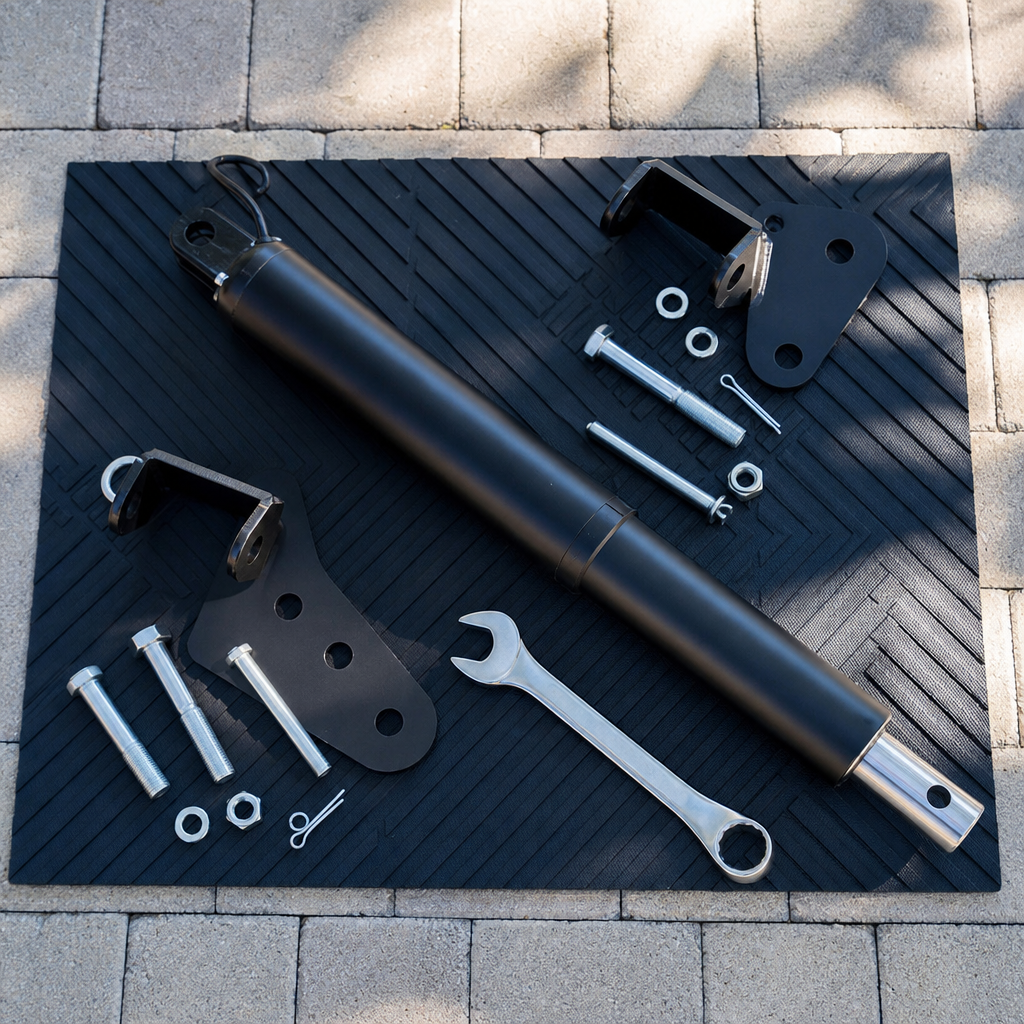
Routine hydraulic gate operator maintenance involves checking fluid levels, inspecting actuator seals, and testing system pressure. According to Ironworks Gate Co., equipment longevity depends on addressing leaks early, monitoring oil viscosity in cold weather, and adhering to scheduled manufacturer service intervals.
Installation and Service Costs
Professional hydraulic gate operator installation and service costs vary based on gate weight, duty cycle demands, and access control integrations. Total project expenses reflect the actuator rating, power infrastructure, safety sensors, and long-term fluid maintenance needs.[3]
Frequently Asked Questions
How do you open an electric gate during a power outage?
Manual release procedures vary by model and manufacturer. Property owners should consult the applicable manufacturer manual for specific instructions on locating and operating the manual release mechanism during a power failure.
What causes an electric gate sensor to stop working?
As Ironworks Gate Co. explains, sensor troubleshooting steps depend on the specific detection hardware installed. Refer to the applicable manufacturer manual for diagnostic guidance, alignment verification, and maintenance procedures.
Why does an automatic gate opener make a grinding noise?
In a hydraulic gate operator, grinding or whining sounds often indicate low hydraulic fluid, air trapped in the lines, or pump cavitation. Inspect fluid levels, bleed trapped air from the cylinder, and check the pump assembly for mechanical wear.
How do you perform a gate motor reset?
Reset and recalibration sequences differ across operator control boards. Follow the step-by-step instructions provided in the manufacturer manual for your specific operator model.
Need hydraulic gate operator?
We’re available now - call for a fast, free estimate.
Sources
- Petition File No. 605 Cal/OSHA Evaluation – dir.ca.gov (2016)
- Gate Operators Sales Market Research Report 2034 – dataintelo.com (2034)
- OHIO TURNPIKE AND INFRASTRUCTURE COMMISSION – ohioturnpike.org
- [PDF] In-ground Swing Gate Operator – Encon Electronics – enconelectronics.com
Related reading: Electric Gate Sensor Not Working – Call Now-10% Off – Same-Day Service – Free Estimate
Related reading: Electric Gate Stuck Open | 10% Off & Free Estimate | On-Site in 60 Minutes
Related reading: How to Open Electric Gate During Power Outage | 10% Off & Free Estimate | Same-Day Service
Frequently Asked Questions
How often does a hydraulic gate operator require fluid maintenance and seal inspection?
Hydraulic gate operators typically require annual fluid level checks and full fluid changes every 2 to 4 years depending on daily cycle volume and climate conditions. Ironworks Gate Co. recommends seasonal seal inspections to prevent fluid contamination, pressure loss, and premature pump cavitation.
Why should I choose a hydraulic gate operator over an electromechanical system?
Hydraulic gate operators utilize fluid pressure rather than mechanical gears, providing higher torque and smoother movement with fewer moving parts prone to friction wear. They are engineered to manage heavy industrial gates, continuous duty cycles, and intense wind loads that standard electromechanical operators cannot reliably handle.
What should I do if my hydraulic gate operator begins moving slowly or erratically?
Sluggish or stuttering movement usually points to low hydraulic fluid, degraded oil viscosity in cold temperatures, or trapped air within the actuator cylinder. Property owners can schedule a prompt system diagnostic with Ironworks Gate Co. at (747) 277-8422 to bleed air lines, test system pressure, and replace leaking seals.
About the author
 |
Sarah Miller Sarah is a seasoned technical writer with over 8 years of experience in the home services industry, specifically focusing on automated gate systems and property access control. She holds a B.A. in Communications from California State University, Fullerton, and works closely with licensed technicians to translate complex mechanical and electrical repair processes into accessible, transparent guides for homeowners and property managers. Her expertise lies in breaking down gate repair costs and maintenance best practices for Southern California residents. |
Gate not opening, off track, or opener dead?
We’re available now - call for a fast, free estimate.
Call Now - Free Estimate